Andrej Karpathy at AI Ascent 2026 · vibe coding to agentic engineering, LLMs as ghosts not animals, and why operators with taste win the next decade.
TL;DR: Karpathy's 2026 AI Ascent keynote is the macro framing for what SideGuy has been quietly running all year: vibe coding (one-shot LLM use) graduates into agentic engineering (factories where tools build tools). The key intellectual move: stop thinking of LLMs as animals (continuous, instinctive) and start thinking of them as ghosts (jagged, statistical, summoned). The corollary: you can outsource your thinking, but never your understanding.
Helped people with this exact issue recently · single operator · no funnel
The intellectual move: ghosts, not animals
The frame that lands: LLMs are not animals. They're ghosts · jagged, statistical, summoned entities that require a different kind of taste and judgment to direct.
That's the difference between someone who prompts ChatGPT well and someone who builds compounding systems on top of LLMs. The first is animal-handling. The second is ghost-summoning. The moat in the second category is taste, not prompting skill.
When to text PJ about Karpathy just mapped the SideGuy playbook
Yes · text now
You've read 2-3 articles, still don't know what to do
About to spend $500+ on a tool / contractor / build
Want a 30-second sanity check from someone not selling you
Local to North County San Diego (faster routing depth)
No · figure it out
You haven't tried the obvious built-in fix yet
Looking for a free template you can DIY in 10 min
Just casually browsing, no real decision pending
Need a service we don't actually route (we'll say so)
Karpathy already gave us Software 2.0 · neural networks as the new programming primitive replacing hand-written code. Software 3.0 is the next layer: LLMs as the new programming primitive on top of those neural networks. You don't write the code; you write the spec, the eval, and the agent that ships the code.
Most teams in 2026 are still treating Software 3.0 like Software 1.0 · writing one-off prompts and calling it a project. The shift Karpathy is naming is the shift from snippet-thinking to factory-thinking.
Why this matches what SideGuy has been doing
SideGuy is one human in Encinitas with a static-HTML site and a stack of small Python tools. None of it is impressive in isolation. What's impressive is that every tool calls another tool I built earlier:
tools/spawn_personal_page.py reuses the same OG generator
tools/video_to_shareable.py shares wedge-template patterns with tools/draft_dm.py
The dashboard's operator switcher means tools/build_batch_2.py output is reusable by any operator I add, not just me
That's the agentic-engineering loop at single-operator scale. The compounding is invisible until it isn't.
The line that should be tattooed somewhere
You can outsource your thinking, but you can never outsource your understanding.
This is exactly why my workflow uses two AI tools (voice-to-GPT for raw capture, paste-to-Claude for refinement and ship) but the judgment loop is mine. The tools generate; I decide what ships. The understanding is mine.
If you're a solo operator and you're doing the opposite · letting AI generate AND decide · you're going to compound the wrong thing very fast.
What changes for operators in the next 12 months
The question is no longer 'can AI write code for me' (yes, obviously). The question is: have you built enough factories that a second operator could plug in tomorrow and ship using your tools?
That's the test. The Operator Slot 2 system on the SideGuy dashboard is the v0 of that pattern. Karpathy just gave the macro framing.
What to actually do with this
LLMs are ghosts not animals · taste and judgment are the moat
You can outsource your thinking but never your understanding · own the judgment loop
Stop writing snippets · build factories that other tools (and other operators) can call
The compounding is invisible until it isn't · month 7 doesn't look like month 1
Software 3.0 is here · write the spec and the eval not the code
Want this mapped to YOUR situation?
One text usually surfaces what's worth building first. No demo call. No retainer.
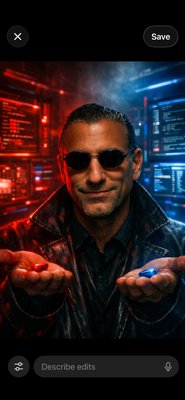
The intellectual move: ghosts, not animals
The frame that lands: LLMs are not animals. They're ghosts · jagged, statistical, summoned entities that require a different kind of taste and judgment to direct.
That's the difference between someone who prompts ChatGPT well and someone who builds compounding systems on top of LLMs. The first is animal-handling. The second is ghost-summoning. The moat in the second category is taste, not prompting skill.
When to text PJ about Karpathy just mapped the SideGuy playbook
Yes · text now
No · figure it out
Software 3.0 in plain terms
Karpathy already gave us Software 2.0 · neural networks as the new programming primitive replacing hand-written code. Software 3.0 is the next layer: LLMs as the new programming primitive on top of those neural networks. You don't write the code; you write the spec, the eval, and the agent that ships the code.
Most teams in 2026 are still treating Software 3.0 like Software 1.0 · writing one-off prompts and calling it a project. The shift Karpathy is naming is the shift from snippet-thinking to factory-thinking.
Why this matches what SideGuy has been doing
SideGuy is one human in Encinitas with a static-HTML site and a stack of small Python tools. None of it is impressive in isolation. What's impressive is that every tool calls another tool I built earlier:
That's the agentic-engineering loop at single-operator scale. The compounding is invisible until it isn't.
The line that should be tattooed somewhere
You can outsource your thinking, but you can never outsource your understanding.
This is exactly why my workflow uses two AI tools (voice-to-GPT for raw capture, paste-to-Claude for refinement and ship) but the judgment loop is mine. The tools generate; I decide what ships. The understanding is mine.
If you're a solo operator and you're doing the opposite · letting AI generate AND decide · you're going to compound the wrong thing very fast.
What changes for operators in the next 12 months
The question is no longer 'can AI write code for me' (yes, obviously). The question is: have you built enough factories that a second operator could plug in tomorrow and ship using your tools?
That's the test. The Operator Slot 2 system on the SideGuy dashboard is the v0 of that pattern. Karpathy just gave the macro framing.